

If you’re thinking about your first tattoo, you’re not really asking if it will hurt. This guide covers everything you need to know about tattoo pain.
→ Shop TNC: TNC Tattoo Numbing Cream | TNC XL Numbing Cream
You’re asking how bad it’s going to be.
There’s a difference.
The truth is, every tattoo involves some level of discomfort. A needle repeatedly moving through skin is never going to feel like a massage. But not all placements are created equal. Some areas are dramatically more manageable than others, especially for first-timers.
Understanding the least painful places to get a tattoo isn’t about avoiding discomfort entirely. It’s about choosing a placement that works with your body, not against it.
Pain is influenced by three main factors: nerve density, skin thickness, and proximity to bone. Areas with thicker skin and more muscle tend to absorb sensation better. Areas with thin skin and lots of nerve endings amplify it.
That’s why the outer upper arm consistently ranks as one of the least painful tattoo spots. There’s muscle, there’s padding, and the nerves are less concentrated. Most people describe it as scratchy or irritating rather than sharp. It’s also easy for artists to work on, which means sessions tend to feel smoother and more controlled.
The forearm is another strong contender for beginners. Especially the outer forearm. It’s visible, versatile for design, and generally very manageable in terms of pain. The closer you move toward the wrist or inner forearm, the more sensitivity increases, but overall it remains one of the best placements for someone easing into tattooing.
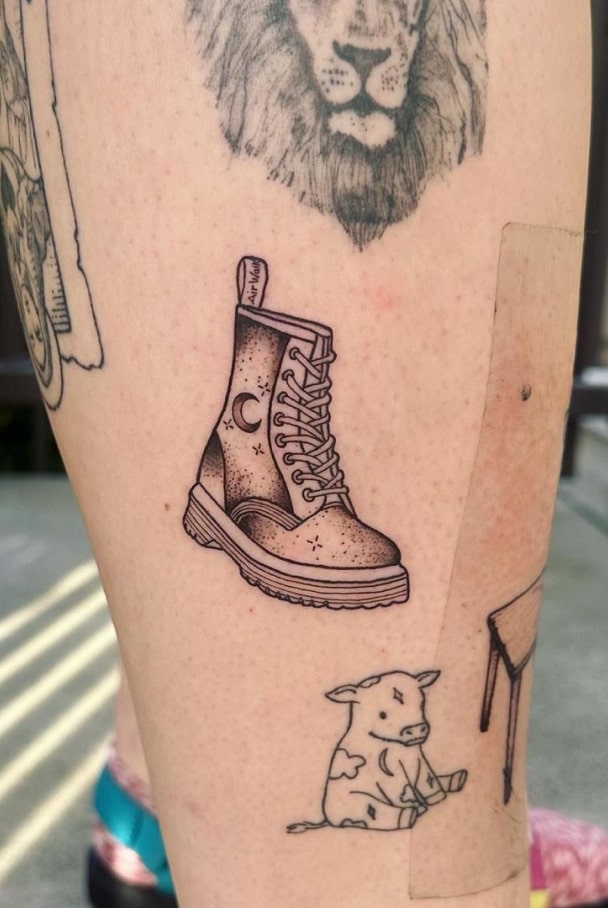
Calves are often overlooked but surprisingly comfortable. The muscle mass helps absorb vibration, and while you may feel pressure, it rarely spikes into sharp discomfort. Many people are surprised by how manageable calf tattoos are compared to the fear they build up beforehand.
The outer thigh is another beginner-friendly placement. It provides a large canvas and tends to feel more like persistent scratching than acute pain. The inner thigh, however, is a completely different experience. Placement matters even within the same limb.
Shoulders, particularly the outer shoulder cap, are also relatively low on the pain scale. The closer you move toward the collarbone, the sharper it can feel. But centered on muscle, the sensation is usually steady and tolerable.
Upper back tattoos can also be more manageable than people assume, particularly across the shoulder blades where there is decent muscle coverage. Directly over the spine is more intense, but off-center work tends to be moderate rather than extreme.
One important thing beginners often misunderstand is that “least painful” doesn’t mean painless. It means sustainable. It means you’re less likely to tense up, less likely to mentally spiral, and more likely to sit calmly through the session.
And that mental calmness matters more than most people realise.
Anxiety amplifies sensation. When you’re braced for impact, your muscles tighten. Tight muscles heighten sensitivity. The body interprets threat faster than it processes logic. That’s why someone convinced a tattoo will be unbearable often experiences it as worse than someone who sits relaxed.
Choosing a lower-pain placement reduces that psychological spike. Your body doesn’t feel under attack. You breathe normally. You settle into the rhythm of the machine.
Another factor that makes certain spots better for first-timers is session length. Outer arm and forearm tattoos are often quicker to complete. Less twisting. Less awkward positioning. Fewer breaks required. A shorter first session builds confidence.
There’s also a visibility factor to consider. Some people want their first tattoo somewhere discreet. Others want it visible. The forearm offers both moderate pain and strong visual impact. The outer upper arm offers discretion with comfort. The calf provides privacy with low sensitivity.
The best first tattoo placement isn’t just about pain. It’s about balancing pain, design, and confidence.
It’s worth acknowledging something else. Many people who get their first tattoo in a low-sensitivity area are shocked by how manageable it feels. The anticipation was worse than the reality. That first experience often removes 70 percent of the fear around future tattoos.
And that’s powerful.
Because once fear drops, decision-making improves. Instead of avoiding certain placements forever, you start evaluating them realistically.
That doesn’t mean everyone should start with ribs or hands. It means you build tolerance and familiarity first.
There’s also a healing advantage to starting in lower-pain areas. Spots with more muscle and less movement tend to swell less and recover more comfortably. A calmer healing process reinforces confidence.
Contrast that with starting on a high-sensitivity area. If your first experience is ribs or feet, you might leave believing tattooing is more brutal than it actually is. Context matters.
The goal for a first tattoo shouldn’t be endurance. It should be experience.
You want to leave the studio thinking, “That wasn’t as bad as I expected.”
Not, “I survived.”
It’s also important to remember that pain is temporary. Even in low-pain placements, discomfort peaks during the session and fades quickly in the days after. For most outer arm or forearm tattoos, soreness drops dramatically within 24 to 48 hours.
The myth that tattoo pain lingers for weeks is exaggerated. In most low-sensitivity placements, it transitions from mild soreness to light tenderness and then disappears entirely during the early healing phase.
If you’re still undecided, ask yourself this: are you avoiding a placement because it genuinely doesn’t suit your design, or because you’ve read too many dramatic stories?
The internet tends to highlight extremes. It rarely highlights normal.
For first-timers especially, the least painful places to get a tattoo are often the smartest starting point. They build trust in the process. They reduce anxiety. They create a positive first experience.
And once you’ve had that positive experience, the entire concept of tattoo pain changes.
It stops being something to fear and becomes something you understand.
And understanding always reduces fear.
Least Painful Places to Get a Tattoo (Best Spots for First Timers)
Related Reading
- How Long Does Numbing Cream Last on a Tattoo? (Complete Guide 2026)
- Do Tattoo Artists Care If You Use Numbing Cream? (The Honest Truth)
- Tattoo Pain Chart for Men: Where Does It Hurt Most? (2026 Guide)
- Signature Duo Bundle
Frequently Asked Questions
How painful is a tattoo really?
Pain varies by placement, individual tolerance, and session length. Bony areas — ribs, spine, elbows, hands — hurt most. Fleshy areas like the outer arm or thigh are far more manageable.
What is the best way to reduce tattoo pain?
Eat beforehand, stay hydrated, avoid alcohol, and use a quality numbing cream. TNC's numbing cream significantly reduces discomfort for any placement, especially ribs, spine, and hands.
How long does post-tattoo soreness last?
Most people experience soreness similar to a sunburn for 2–5 days after a session. Proper aftercare — keeping the area clean and moisturised — shortens recovery time noticeably.