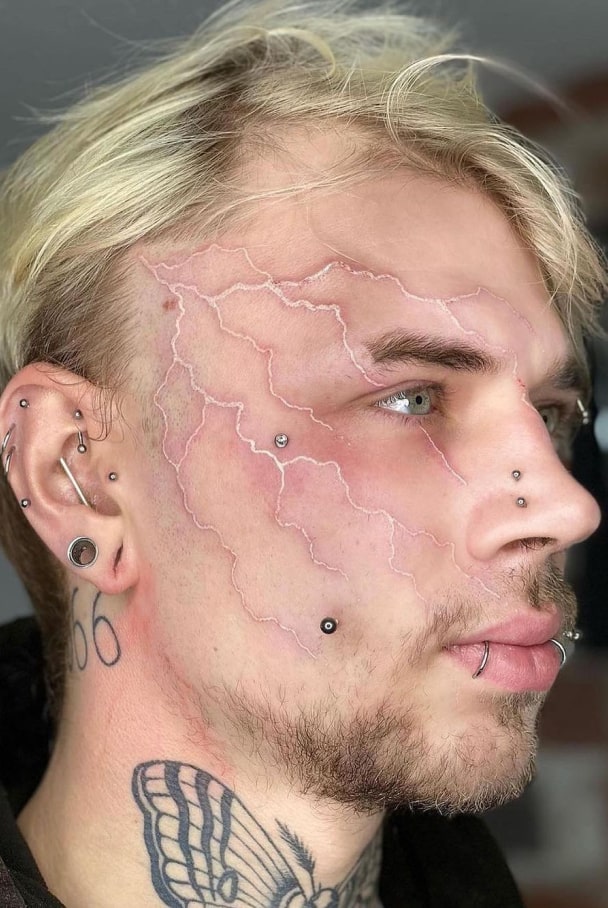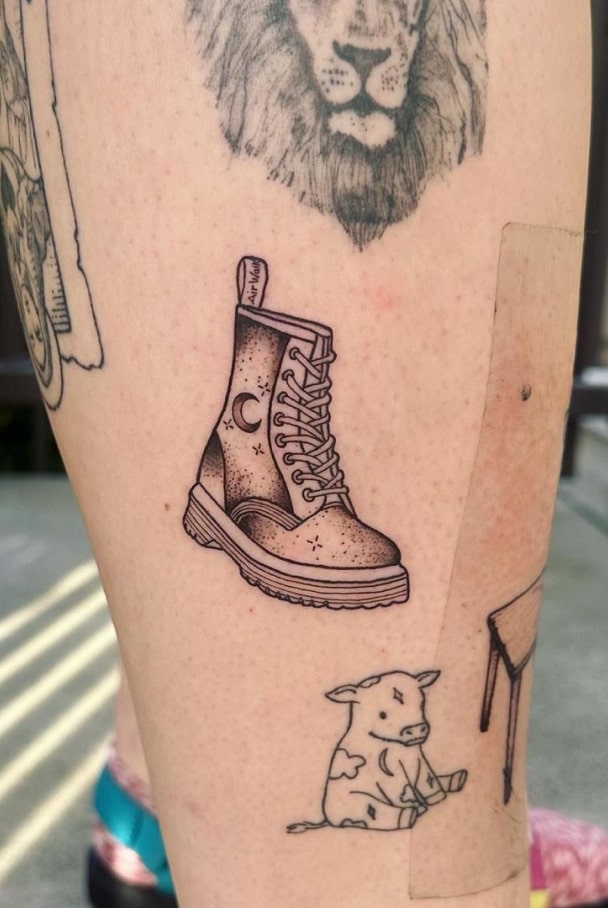


You waited weeks for it to heal. You followed the aftercare instructions to the letter. And now something looks... off.
The lines that were supposed to be crisp and clean have a blurry shadow spreading around them. The edges look smudged. It looks like the ink has leaked out from under the tattoo.
That's tattoo blowout — and if you've just spotted it on your new piece, you're probably spiralling through Reddit threads and tattoo forums trying to figure out what went wrong and whether it's fixable.
Here's the full picture: what tattoo blowout actually is, why it happens, how to tell it apart from normal bruising, and what your options are if you're dealing with it right now.
Tattoo Blowout: What It Is, Why It Happens & How to Prevent It (2026)
At TNC, we've helped over 600,000 customers make their tattoo experience more comfortable — here's what we've learned.
What Is Tattoo Blowout?
Tattoo blowout happens when ink is deposited too deep into the skin.
Here's the anatomy: a tattoo needle is supposed to place ink into the dermis — the second layer of skin, sitting between the epidermis (surface layer) and the hypodermis (fat layer). The dermis is the sweet spot. It's stable enough to hold ink permanently but shallow enough to display the design clearly through the skin above it.
When the needle goes too deep — past the dermis and into the fat layer — the ink doesn't stay put. Fat tissue is soft and unstructured, so the ink spreads laterally, migrating outward from where it was placed. The result is that blurred, smudged, halo-like appearance around your tattoo lines.
That's blowout. It's the ink sitting where it shouldn't be, in tissue that can't hold it in place.
What Does Tattoo Blowout Look Like?
Blowout is distinctive once you know what you're looking at:
- Blurred or smudged edges: Lines that should be sharp and defined have a soft, hazy border — like looking at text through frosted glass.
- Ink "shadow": A coloured shadow extending outward from lines, usually 1-3mm beyond the intended design edge.
- Blue-grey haze: Even with black ink, blown-out areas often appear blue-grey because the ink is sitting deeper in the skin and the layers above filter the colour.
- Inconsistent patches: Blowout rarely affects an entire tattoo uniformly. It tends to appear in specific areas where the needle went too deep — often near joints, on curves, or where the artist applied extra pressure.
Tattoo Blowout vs Bruising: How to Tell the Difference
This is the question that dominates every tattoo forum, and for good reason — fresh tattoo bruising and early-stage blowout can look nearly identical. Here's how to distinguish them:
It's Probably Bruising If:
- The discolouration changes colour over time (purple → green → yellow → gone)
- It appeared immediately after the session and is fading by day 5-7
- The colour doesn't match your tattoo ink (bruises are typically purple, blue, or yellow)
- It's completely gone within 1-2 weeks
- The area was particularly painful during the session (bruising is common in high-pain zones)
It's Probably Blowout If:
- The discolouration matches your ink colour (black ink = blue-grey shadow; coloured ink = a washed-out version of that colour)
- It hasn't changed colour or faded after 2-3 weeks
- The blur follows your tattoo lines specifically rather than being a general area of discolouration
- It appeared gradually during the healing process rather than immediately
- It's located in a thin-skinned area (see high-risk zones below)
The 3-week rule: If the discolouration hasn't faded or changed colour after 3 weeks, it's blowout. Bruising heals. Blowout doesn't.
Why Does Tattoo Blowout Happen?
Understanding the causes helps with prevention. Blowout typically results from one or more of these factors:
1. Needle Depth (The Primary Cause)
The most common reason. The artist's needle penetrated past the dermis into the fat layer. This can happen because of inconsistent hand pressure, incorrect machine settings, or inexperience with a particular skin type or body area.
2. Thin-Skinned Areas (High-Risk Zones)
Some body parts are blowout-prone because the dermis is thinner, giving the artist less margin for error:
- Fingers and hands
- Feet and ankles
- Inner wrists
- Inner bicep
- Behind the ear
- Around joints (elbows, knees, ankles)
These are the areas where blowout reports are highest — not coincidentally, they're also among the most painful tattoo placements.
3. Skin Movement During Tattooing
When skin isn't held taut enough — or when the client flinches, twitches, or moves — the needle can angle into deeper tissue. This is especially common in areas where skin is loose or mobile.
4. Over-Working an Area
Going over the same area too many times (common when trying to achieve solid saturation) can push ink deeper with each pass. The skin gets increasingly traumatised, and the dermis boundary becomes less defined.
5. Skin Type Variation
Every person's skin is different. Thickness, elasticity, fat distribution, and even hydration levels affect how deep the needle needs to go. Experienced artists read the skin and adjust accordingly — less experienced artists may use a one-size-fits-all approach that doesn't account for individual variation.
Can You Fix a Tattoo Blowout?
The hard truth: you cannot reverse a tattoo blowout. The ink has migrated into tissue that won't release it through natural healing. But you do have options to improve the situation.
Option 1: Cover-Up or Design Integration
A skilled artist can add design elements — shading, thicker lines, additional detail — that incorporate or mask the blowout. This is the most common and often most effective approach. The blowout becomes part of the design rather than a flaw.
Option 2: Laser Treatment
Laser tattoo removal can target blown-out ink to lighten it, making it less visible. This won't produce perfectly crisp lines, but it can reduce the shadow effect significantly. Multiple sessions are typically needed, and results vary based on ink colour and depth.
Option 3: Wait and Accept
Some minor blowout becomes less noticeable over time as the tattoo ages and the surrounding skin changes. What looks devastating at 3 weeks may be barely noticeable at 3 years — especially on larger pieces or heavily shaded work where some line softening is natural.
Option 4: Strategic Touch-Up
If the blowout is mild, a touch-up session with a skilled artist can adjust line thickness and add shading to blend the blowout into the surrounding work. This is different from a cover-up — it's a refinement of the existing design.
How to Prevent Tattoo Blowout
Prevention is infinitely better than correction. Here's how to minimise your blowout risk:
Choose an Experienced Artist
This is the single most important factor. Blowout is primarily a technique issue — experienced artists maintain consistent needle depth across different skin types and body areas. Look at healed work in their portfolio, not just fresh pieces. Ask specifically about their experience with the body part you want tattooed.
Know Your High-Risk Zones
If you're getting tattooed on fingers, feet, inner wrist, or any thin-skinned area, you're accepting a higher blowout risk. That doesn't mean you shouldn't do it — but choose an artist who specialises in those placements.
Stay Still During Your Session
Flinching and movement are genuine blowout contributors. If you're worried about staying still during a painful session — especially on a high-risk placement — using a numbing cream before your appointment genuinely helps. A numb, relaxed client doesn't flinch, twitch, or tense up, giving the artist a stable canvas.
Apply Signature Tattoo Numbing Cream 45-60 minutes before your session, and use Miracle Numb Spray for mid-session comfort. Less pain = less movement = better outcome.
Follow Proper Aftercare
While aftercare can't cause blowout (the ink depth is set during the session), poor aftercare can make blowout appear worse. Infection, excessive swelling, and trauma to healing skin can all exacerbate the appearance of blown-out lines. Follow your artist's aftercare instructions to the letter.
For detailed aftercare guidance, check out our Tattoo Healing Stages: Day by Day Guide.
Keep the Area Moisturised
Well-hydrated, healthy skin during healing maintains its structure better. Use a quality aftercare product — our Easy Heal Tattoo Balm is designed specifically for healing tattoos. Dry, cracked healing skin can make the visual impact of blowout more pronounced.
Does Numbing Cream Cause Tattoo Blowout?
This question comes up constantly — and the answer is no.
Tattoo blowout is caused by the needle going too deep. That's a function of the artist's technique, machine settings, and hand pressure — not what product was on the skin beforehand. Quality numbing cream doesn't change skin structure, needle depth, or ink behaviour.
In fact, there's a reasonable argument that numbing cream reduces blowout risk. A client who isn't in pain is a client who isn't flinching, jerking, or tensing up — all of which can cause the artist to inadvertently push the needle too deep. Calm skin, calm client, consistent depth.
For more on this, read Does Numbing Cream Cause Tattoo Fading? The Science (and the Marketing BS).
The Bottom Line
Tattoo blowout is frustrating — but it's also largely preventable. Choose an experienced artist, understand your risk zones, and stay still during your session. If you're getting tattooed on a thin-skinned, high-risk area, take every precaution: research your artist's healed work on that body part, use numbing cream to stay comfortable and still, and follow proper aftercare to give your tattoo the best chance of healing cleanly.
If you're already dealing with blowout, don't panic. Give it the full 3-week healing window to confirm it's blowout and not bruising, then consult a skilled artist about your correction options. It's a setback — not a disaster.
Getting tattooed on a high-risk area? Go in prepared with Signature Tattoo Numbing Cream. After your session, support healing with Easy Heal Tattoo Balm. Less movement, better results. Follow us on Instagram and TikTok for expert tattoo tips.