

The Most Painful Tattoo Placements (And How to Survive Them)
→ Shop TNC: Tattoo Armour SPF 30+
Let's be honest — you already know tattoos hurt. But how much they hurt depends enormously on where you're getting inked. The difference between a calf tattoo and a rib piece isn't just discomfort — it's the difference between a pleasant Saturday afternoon and a white-knuckle endurance test. This guide covers everything you need to know about tattoo pain.
Here's a complete breakdown of every major tattoo placement, ranked from "barely feel it" to "genuinely reconsidering my life choices" — with the science behind why some spots are brutal, and the practical strategies that actually help you survive them.
Why Do Some Placements Hurt More Than Others?
Pain during tattooing comes down to three main factors:
1. Nerve density. Areas packed with nerve endings (fingers, inner wrist, armpits, groin) transmit pain signals faster and more intensely. The needle isn't just breaking skin — it's stimulating a dense network of sensory receptors. 2. Bone proximity. When the needle vibrates close to bone with minimal fat or muscle buffer — think ribs, spine, elbows, collarbones — the sensation becomes deeper and more grinding. Some people describe it as a "bone buzz" that goes straight through you. 3. Skin thickness. Thin skin (inner arm, eyelids, ankle) offers less cushion between the needle and the nerve network below. Thick, meaty areas (outer thigh, outer calf) create natural padding that dampens the signal.A fourth factor: breathing and muscle movement. Areas that expand and contract with every breath — ribs, sternum, chest — mean the needle is working against constant motion, which increases both discomfort and healing difficulty.
The Most Painful Tattoo Placements, Ranked
🔴 EXTREME PAIN (8–10/10)
Ribs / Ribcage
The notorious one. Thin skin stretched directly over bone, ribs that flex with every breath, and a location that's essentially impossible to brace or stabilise. The constant movement means the artist is chasing a moving target while you're trying not to scream.
Why it's brutal: Intercostal nerves run between each rib — these are the same nerves that make broken ribs so painful. The needle triggers them with every pass. Survival strategy: Book morning sessions (you're less fatigued), breathe slowly and deliberately, and seriously consider numbing cream applied 60–90 minutes before your appointment. Many people who swore they'd never use numbing cream changed their mind for a rib piece.Going ahead with ribs? Read our complete rib tattoo pain and prep guide.
Spine
The spine is a column of vertebrae wrapped in thin skin. Almost no fat, dense nerve roots running in every direction, and that distinctive deep vibration that travels through your whole back. Many people report the sensation is less "sharp" and more of an unnerving, buzzing ache that radiates outward.
Why it's brutal: The needle vibrates against the spinous processes — the bony ridges you can feel when you run your hand down someone's back. There's almost nothing between the skin and the bone. Survival strategy: Lie perfectly flat and still (harder than it sounds), keep your breathing steady, and split long pieces into multiple sessions if possible.Head and Skull
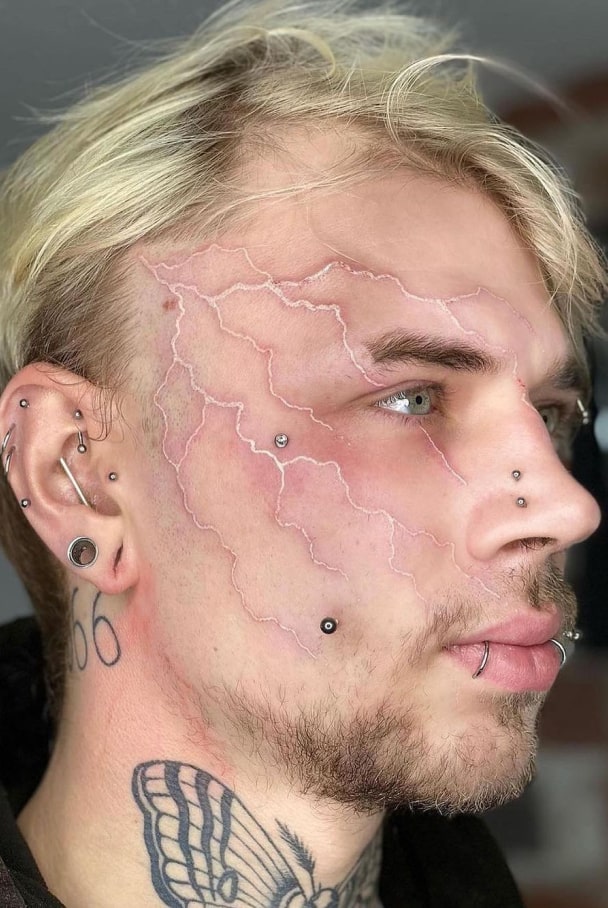
Few people tattoo their head, which is a natural deterrent for a reason. The skull is one large bone directly under thin skin with almost zero fat or muscle. The vibration from the machine travels through the entire skull, creating a sensation unlike any other body part.
Why it's brutal: Dense cranial nerve coverage plus direct bone contact. The sound is also intensified through the skull, making the experience feel more overwhelming.Armpits
One of the most avoided placements — for good reason. The armpit is packed with lymph nodes, sensitive skin, and a concentration of nerve endings that make this area notoriously reactive. It also requires an awkward position for extended periods.
Why it's brutal: The skin is extremely thin and folded, with constant nerve density. Very little natural padding.🟠 HIGH PAIN (6–8/10)
Sternum / Chest Centre
The sternum (breastbone) runs down the centre of your chest — and like the spine, it's bone under thin skin with minimal cushioning. Women typically find this more painful than men due to skin thinness differences.
The constant rise and fall of your chest with every breath also makes this a dynamic, uncomfortable session.
Survival strategy: Meditative breathing techniques help enormously here. Some clients find that breathing with the needle passes rather than against them reduces the perceived intensity.Feet and Ankles
Lots of small bones, tendons running right beneath the surface, and thin skin with significant nerve density. The top of the foot is one of the most frequently cited "worse than I expected" spots by first-timers.
Why it's brutal: Every bone and tendon is close to the surface. The foot is also difficult to hold completely still — natural muscle twitching makes it worse. Survival strategy: Stay warm (cold feet tighten, making pain worse), keep sessions shorter, and elevate the foot during breaks.Hands and Fingers
Hands are covered in nerve endings — that's literally what makes them so useful. Every millimetre of a finger has sensory receptors designed to detect touch, pressure, and pain with extreme precision.
Add to that: very thin skin, almost no fat, bones directly below, and ink that fades faster on hands (requiring more touch-ups).
Why it's brutal: The same neural density that makes your hands sensitive instruments makes tattooing them an intense experience.Inner Wrist
The wrist seems small, but the inside has thin skin directly over veins and nerves. Many clients describe the inner wrist as "sharper" than they expected compared to the outer wrist.
Kneecap and Knee Ditch
The knee is a joint — bony at the cap, with the back of the knee (the "ditch") being similar to the inner elbow in sensitivity. Both areas have thin skin and significant nerve concentration.
🟡 MODERATE PAIN (4–6/10)
Chest (outer, away from sternum)
Away from the sternum, chest tattoos become more manageable — there's more muscle and fat to buffer the needle, and the skin is thicker. The collarbones elevate the pain level, however, if the design approaches them.
Shoulder Blade / Upper Back
A popular first major piece location for good reason. Good muscle padding, reasonably thick skin, and no major bone proximity through most of the area. Pain tends to be moderate and consistent rather than sharp.
Upper Thigh (outer)
The outer thigh is one of the most forgiving spots for large-scale work. Significant muscle and fat, thick skin, lower nerve density than most areas. Pain is usually described as "a consistent dull ache" rather than anything sharp.
Calf (outer)
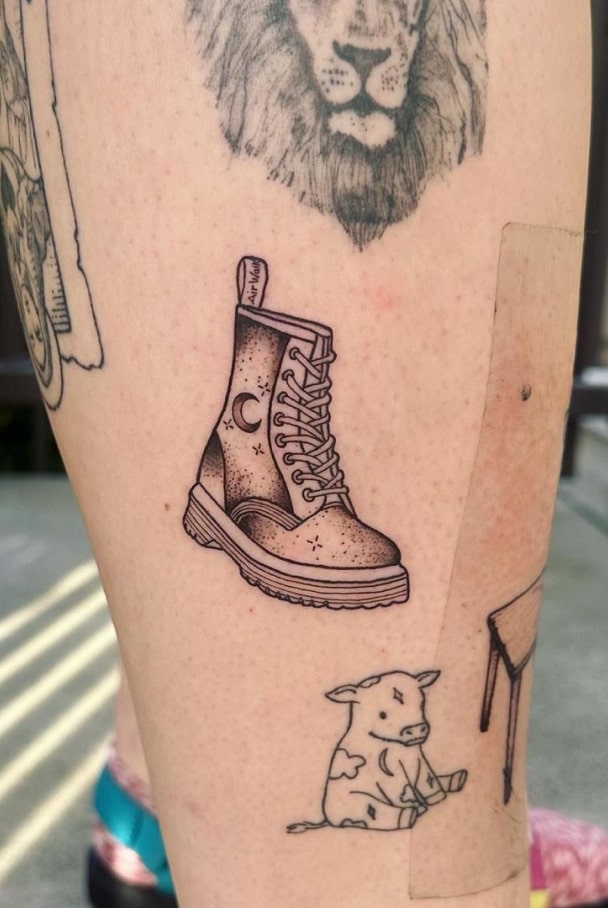
Similar to the outer thigh — meaty, cushioned, lower nerve density. The outer calf is frequently recommended for first tattoos that need to be larger. The inner calf is significantly more painful.
Upper Arm (outer/bicep)
The classic "first tattoo" location. Good muscle coverage, reasonable skin thickness, manageable nerve density. Pain is typically low and consistent.
Shoulder (top)
Wide muscle coverage, thick skin, and one of the genuinely easiest spots to tattoo. Multiple clients have described falling asleep during shoulder sessions. If that's not a data point, nothing is.
🟢 LEAST PAIN (1–4/10)
Outer Thigh
Consistently rated one of the least painful spots. Large flat canvas, thick skin, decent muscle and fat coverage. If you want a big piece without the brutal session — start here.
Upper Outer Arm (lateral)
The "sleeve starter" — good coverage, manageable pain, easy to brace and stay still.
Outer Calf
Lower leg, outer surface — good padding, lower nerve density. A solid choice for visible but manageable ink.
Buttocks
More cushion than anywhere else. Genuinely one of the least painful tattoo placements on the body, despite the social awkwardness of the session.
Pain vs. Area: What the Research Says
Tattoo pain research is limited (ethically, it's hard to conduct), but what exists is consistent: bony prominences and high-nerve-density areas consistently rank as most painful, while muscular, well-padded areas rank lowest.
A 2024 study on pain perception during tattooing noted that anxiety itself increases perceived pain — your cortisol response makes the same needle hit harder. This is partly why experienced tattoo collectors often describe later sessions as easier: they've learned to manage the anxiety response.
The research also confirms what every artist knows: tolerance varies dramatically between individuals. Someone with higher natural pain thresholds, more endorphins, or who has simply been tattooed more, will have a very different experience than someone getting their first piece.
How to Reduce Tattoo Pain at Any Location
1. Numbing Cream (The Most Effective Tool)
Applied 60–90 minutes before your appointment, a quality numbing cream with professional-strength blocks sodium channels in skin nerve endings — meaning the needle signals never reach your brain. For high-pain placements like ribs, spine, and hands, this is genuinely life-changing.
Critical: Apply to intact skin before the tattoo starts. Once the skin is broken, switch to a numbing spray (like Miracle Numb Spray) which works on open skin and can be applied mid-session.Ready to try it? TNC's Signature Tattoo Numbing Cream — professional-strength, designed for pre-tattoo prep. Apply 60–90 minutes before, wrap with cling film, remove before the needle starts.
2. Eat Before You Go
Tattooing on an empty stomach drops your blood sugar mid-session and makes pain significantly worse. Eat a full meal 1–2 hours before. Bring snacks for longer sessions.
3. Stay Hydrated
Dehydrated skin is harder to work with and increases pain. Drink water consistently in the 24 hours before your appointment.
4. Sleep the Night Before
Sleep deprivation lowers your pain threshold. A well-rested body literally hurts less.
5. Breathe Deliberately
Box breathing (4 counts in, 4 hold, 4 out, 4 hold) during painful passes activates your parasympathetic nervous system and genuinely reduces perceived intensity. It's not just something artists say to be polite.
6. Take Breaks
You're allowed to ask for breaks. A 5-minute break to sit up, breathe, eat something, and reset makes the second half of a session significantly more manageable than white-knuckling through.
7. Avoid Alcohol and Aspirin
Alcohol thins blood (making the tattoo bleed more and hurt more), and aspirin does the same. Neither helps you through the session — both make aftercare harder.
Pain Tolerance and Body Chemistry: Individual Factors
A few factors that affect your specific experience:
- Endorphin levels: Your body releases natural painkillers during tattooing. First pieces often hurt most because your system hasn't learned to ramp up the endorphin response yet.
- Menstrual cycle: Some research suggests pain tolerance is lower in the days before and during menstruation due to hormonal shifts.
- Testosterone: Recent University of Virginia research (2024) found testosterone plays a role in pain management — though this doesn't mean any one group experiences tattoos dramatically differently.
- Prior tattoo experience: Experienced collectors consistently report later tattoos hurt less — partly desensitisation, partly learned stress management.
- Medication: Certain medications affect pain response. Always check with a doctor if you're on ongoing medication before getting tattooed.
The Honest Take: Is Any Spot "Easy"?
Not really. Getting stabbed thousands of times with a vibrating needle is always going to involve some discomfort. But "painful" exists on a very wide spectrum — from a mild burning scratch to an ordeal.
The good news: humans are remarkably adaptable. The anticipation is almost always worse than the reality. And there's no award for suffering through more pain than you need to. If numbing cream makes a rib piece a 3/10 instead of an 8/10 — that's a win for you, for your artist, and for the finished piece.
A calmer client = a steadier body = a better tattoo. Every good artist knows it.FAQ: Most Painful Tattoo Placements
Q: What is the most painful place to get a tattoo?A: The ribs, spine, head/skull, and armpits consistently rank as the most painful tattoo placements due to thin skin, bone proximity, and high nerve density. The ribs are most frequently cited as the worst single experience.
Q: Is there a way to make a rib tattoo less painful?A: Yes — a professional-strength numbing cream applied 60–90 minutes before the appointment is the most effective method. Eating beforehand, sleeping well, staying hydrated, and practising breathing techniques all contribute meaningful pain reduction on top of that.
Q: Do hand tattoos hurt a lot?A: Yes. Hands have extremely high nerve density — they're designed to detect fine sensation, which means they register pain efficiently too. Add thin skin, multiple small bones, and almost no fat padding, and hand tattoos consistently rank as high-pain placements.
Q: Does pain get better after the first tattoo?A: For most people, yes. Your body learns to manage the stress response and can produce endorphins more effectively. Experienced collectors frequently describe later sessions as significantly more manageable than their first.
Q: Can I use numbing cream on the ribs?A: Absolutely. Apply TNC Numbing Cream to clean, dry skin 60–90 minutes before your appointment, cover with cling film, and remove just before the artist starts. The ribs are one of the most common placements where people use numbing cream for the first time — and don't look back.
The Bottom Line
No placement is completely painless — but with the right prep, even the most intense spots are survivable. The people coming out of rib sessions grinning are almost always the ones who came prepared: well-rested, well-fed, properly numbed, and ready to breathe through it.
F*CK PAIN. Come prepared.→ Shop TNC Numbing Cream — professional-strength, designed for tattoo prep → Miracle Numb Spray — for mid-session top-ups on broken skin → Read: How to Apply Numbing Cream Before a Tattoo → Read: What Makes Tattoo Pain Worse (And How to Avoid It)